
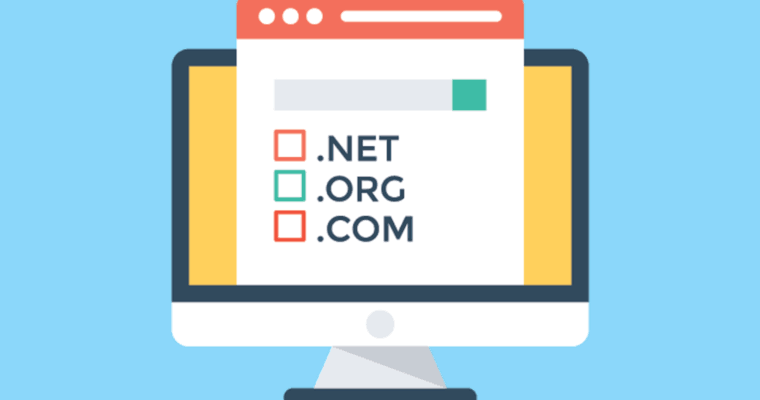
Starting an Online Business – Choosing the Right Domain Name

Starting an Online Business – Choosing the Right Domain Name

Choosing A Domain Name In the business of building a large number of Niche sites, domain names are going to likely be your single largest cost, or at least near the top if you are outsourcing most of your work. Domain names are important for many reasons, not the least of which is that you don’t want to be wasting money on poor choice domain names. In this tutorial, I’m going to provide you with the information you need to ensure you are choosing the most appropriate domain name for your sites. First, for those who don’t know what a domain name is, it’s simply the web address of your site – espn.com is a domain name, for example. A domain name is an key step in getting set up and online. It’s the first thing your customers will see. You need to make a great first impression. Your potential customers will see your name in many different places: Natural Search results such as on Google, Yahoo and Microsoft search Video Marketing Pay Per Click Advertisements that you run Ezines / Newsletters that you publish or run ads in Email and Forum Signatures Off line advertising such as newspapers, direct mail, business cards or magazines. There are a number of things to consider when purchasing a domain name(s). Here are the key considerations you’ll want to run through prior to making your purchase: Top Domain Name Don’ts: Don’t use excessive dashes in the domain name. Don’t use unrelated phrases in the domain name. Don’t use too many keywords in the domain name. Don’t repeat the primary keyword in the domain name. Top Domain Dos: Do use the primary keyword phrase in your domain name. Be as specific as possible for your keyword phrase (long tail keyword phrases) Place the primary keyword phrase at the beginning of the domain name. Include commonly used related phrases in the name like “news”, “tips”, etc Use action keywords like “cheap”, “discount”, “buy”, “deals”, “get”, etc. Use top level domains like.com,.net,.info,, or.org, Some additional tips: 1. Use a specific keyword – or better yet, a long tail keyword phrase – in your domain name. I don’t recommend using multiple keywords and definitely DO NOT repeat the same keyword in the domain name. 2. Put your primary keyword at the beginning of the domain name. Let’s use an example to illustrate: Suppose you are selling garden tools. Not just any garden tools; you sell low-cost, high-quality garden tools. The name of your company is Garden Tool World. Using the tips above, you will purchase the domain names for your company. But what about your product? The key here is to look for names for your product domain that people will be searching for. When a potential customer goes to a search engine, will he or she look for “low-cost high-quality garden tools”? Or the customer look for “Cheap Garden Tools”? From our earlier research, you can find out what people are looking for. So if people are looking for “Cheap Garden Tools,” then your domain name might be cheapgardentools dot com. Choosing a domain name is an important part of the overall marketing process and should not be taken lightly. Make sure your domain name represents your company, product, and image, and you’ll be setting a great foundation for future sales. 3. If you run into difficulty in getting the domain name that you want,, try using action words at the end of your domain name. Examples of this would include for sale, discount, on eBay, deals, etc. You could also use tips, blog or info., for example. If you had a site using videos to train roofers, you could go with roofervideos.com. Another idea would be to put a number behind your keyword. For example, cheapgardentools442.com would work just as well as cheapgardentools.com because your keyword phrase is at the beginning of the domain name. 4. Don’t be afraid to use keywords that reach out and grab attention. Words like warning, alert, cure and warning are all such terms. 5. By all means, DO NOT use words in your domain name that have nothing to do with what it is your site is about. 6 Use only well known top level domains such as.com,.net,.info,.org &.us. Stay away from domains like.tv and.biz. Credibility is key – sticking with top level domain names will help you in that department. Of course, if you can get.com, that’s the way to go, but if the name you want isn’t available in.com, one of the other top level names will be just fine. If you find you are having trouble coming up with a domain name for your venture, you can visit Nameboy.com. That site will generate plenty of domain name suggestions for you based on the keywords you enter. Another site I like to use is Instant Domain Search. This particular site “helps you find a domain name as fast as you can type.” 7. Stay away from domain names with hyphens in them. While this used to be a good idea, it no longer is. Using domain names with hyphens in them can have an adverse impact on your ability to rank highly in the search engines. 8. Keep it as short as possible. Although some places allow you to register a name with up to 63 characters, you have to keep in mind that people need to be able to remember it and easily type it into their browser. Try to register the shortest name that your customers and other site visitors will associate with your web site. The general rule of thumb is, keep it under seven characters if possible (not including the suffix). While the vast majority of your potential customers will be clicking on a link, there are those who will type in your domain name. 9. Go with.com when at all possible. Dot what? There are many suffixes available now. For businesses, we recommend a.com suffix. It is the first extension that

Starting an Online Business – Choosing the Right Domain Name Read More »

What is Shared Hosting

What is Shared Hosting?

Shared hosting is an ideal, economical solution for companies who want to run multiple websites. The advantages and disadvantages of sharing a server depend on a variety of factors, including the hosting company, number of websites involved, and the amount of traffic the sites receive. A systems administrator manages the server and the websites to ensure that they are running securely. The owner of each site won’t have individual access to all of the root files. Since small sized businesses and webmasters of personal sites don’t use all of the features and resources available to them, shared hosting is a great choice. How is the space measured? In shared hosting, space is offered in the form of gigabytes. The more bytes a company has, the more files it can host. Websites with a lot of traffic will require more bandwidth, which means they’ll receive the majority of the shared space. A simple blog will require less bandwidth than a music or video streaming website, therefore the former will be given less space to share. What are the benefits of shared hosting? Cost-efficiency and simplicity are the two main benefits. Sharing server space can be fairly cheap. Since the providers don’t have to spend a lot of money on resources, they are able to offer hosting at discounted price. The free add-ons, such as templates and website builders, also save the webmaster money. The host manages the resources and maintains the server, which makes things a lot easier on the site owners. For the technically challenged, this is the best solution, since no knowledge of programming, designing, or hosting is required. What should be considered when choosing a shared web hosting company? An ideal shared hosting company is one that provides its members with a good plan that is suitable for all levels of experience. Everyone from beginner webmasters to experienced professionals should be able to utilize the tools and access the control panel without any problems. A good shared hosting will provide all users with free site builders and programming language support. It’s also important to choose a company that offers excellent customer service. Quality service is a sign that the company is genuinely interested in the success of its users. The server must be maintained securely and appropriately for optimal performance. Webmasters should be able to receive technical support whenever they need it. The other websites involved in the host sharing is something else to consider. If other sites receive the most traffic and require a lot of bandwidth, those few that don’t will experience some downtime. There should be plenty of resources available for ALL users, and not just a select few. Every website should receive a fair amount of bandwidth.   Article Source: http://EzineArticles.com/4267397

What is Shared Hosting? Read More »

Types of Web Hosting Services

Types of Web Hosting Services

Before selecting a web host it is paramount that you understand the various types of hosting options you have. Every website has different needs and meeting your site’s needs will help produce a satisfying end result. Hosting services available to you will likely fall into one of the following categories: Free Web Hosting Free web hosting is definitely the cheapest option available, however as we all know there’s no such thing as a free lunch and this holds true with so called “free” hosting services as well. Free web hosts will often be advertisement supported and have very limited features, storage space, and bandwidth. Generally this is not a good option for any website which supports a business or needs to offer users a stable and efficient environment. Free hosting services are best for small web sites which are not intended to do much more than share a bit of info with a small group of friends. Shared Web Hosting With shared web hosting a single computer referred to as a box or a server will generally hold a large number of websites. The number will depend on the company, the cost, and the hardware that makes up the machine. Shared hosting is often a reliable hosting option for most websites including both small business and personal use. The overall quality, speed, and cost will fluctuate significantly from host to host so it is important to do your homework before selecting a shared hosting center. Often websites which abuse or use more resources including CPU time or bandwidth will be shut down. If your website requires heavy resource allotment you will likely need to look into another hosting option. Reseller Web Hosting This is a less common form of hosting but it allows clients to become web hosts themselves. Common examples of this would be web design firms who host their clients’ websites. In truth, the only difference between reseller web hosting and shared hosting is generally the size of the hosting company. The larger hosting companies such as Bluehost and HostMonster are just much larger versions of reseller web hosting. Virtual Dedicated Server Virtual dedicated servers are very similar to shared hosting except in how the allotment of resources is handled. Whereas with shared hosting all clients share the same CPU and bandwidth resources with virtual dedicated servers each client is guaranteed a set amount of CPU power and bandwidth. Virtual dedicated servers also offer their clients what is often referred to as “root” access to their virtual machine. This offers them more hands on control with how the machine runs including the ability to tinker with the operating system. Dedicated Hosting Service With dedicated hosting services the user has full control over the server and is the only client who uses the server. There are normally two types of dedicated hosting options which are managed and unmanaged. With managed hosting the client will have various support-personal or plans in place to assist them with managing the server and ensuring that things such as its security policies are up to date. Unmanaged will leave all the responsibility in the hands of the client which can be less expensive in some cases. In both cases having a dedicated server offers you much more control over what options are available on your server from mail programs to FTP services and so on. Naturally dedicated servers are much more expensive and therefore many webmasters opt for the cheaper shared or virtual private server options. With both types of dedicated hosting the servers are owned by the hosting company. Colocation Web Hosting Service Colocation is similar to dedicating hosting services, but in this case the user fully owns the server and the hosting center simply provides a physical space, power, and a connection to the internet for the client. In many cases there is little or no further support for the client beyond ensuring that there is power and the negotiated bandwidth available to the server. With this option in most cases the owner of the server will have an administrator who must visit to the facility or have another form of remote access to the machine. Clustered Hosting In some cases it is not enough to have one server handling the needs of a website. For these cases clustered hosting becomes a viable solution. With clustered hosting multiple servers host the same information allowing a much larger base of users to access the information at one time. Grid Hosting Grid hosting is a form of distributed hosting where a server cluster acts like a grid and is composed of multiple nodes. Home Server In some cases webmasters elect to manage their own web servers at home or at their place of business. This can be done on both a consumer-grade broadband connection or in some cases on something more capable. Home servers are much like colocation except for the loss of the expensive facilities which generally have backup power sources, industrial grade cooling systems, and various other benefits. Some ISPs do not allow their users to host their own websites so it is best to investigate this before attempting to setup your own web server. Which Hosting Option Should I Choose? If you’re reading this article you probably should be choosing shared hosting, or either virtual or fully dedicated hosting. For most small to medium sized websites these are perfectly adequate and viable options. If your web hosting needs are larger than this you will likely have an IT specialist who is part of your team who would be better equipped to assess your web hosting needs. Hopefully by now you have a better idea about what type of hosting you need. Now it’s time for the real fun, choosing the best webhost! Article Source: http://EzineArticles.com/1704048

Types of Web Hosting Services Read More »

Web Hosting – A Guide For Beginners

Web Hosting – A Guide For Beginners

So you’re looking to learn about web hosting and what it has to offer or you may not know much about web hosting? There is no shame in not knowing this information. Everyone has to start at the beginning at some point. On that note, lets begin learning about web hosting. First off, what is web hosting and how does it work? Web hosting is the business practice of providing space and bandwidth on a high-powered computer server that is connected to the Internet at very high speeds. Hosting companies maintain large networks of high-powered web server computers in a physical location known as a data center. These computer servers are connected to a very fast, and generally redundant, Internet connection. The data centers have primary and backup power, a fast connection to the Internet, and a security monitoring staff. The web hosting companies provide a share of disk space and available bandwidth to a customer for a monthly fee. Once the customer is signed up, they can upload files to their personal space on the web server and the information is then viewable to anyone interested on the Internet. The monthly fee the web hosting company charges is much less than what it would cost to run a server out of your own home or data center. This is the reason these companies exist. They take care of all the hardware, software, and other technical needs for you. Types of web hosting There are many different types of web hosting offers, but the main three are shared, reseller, and dedicated. Each type of hosting is for a different purpose. Shared Web Hosting Shared web hosting is the most popular form of hosting. Shared hosting is a portion of disk space and bandwidth provided to you by the web hosting company on a high-powered server. There are many other web sites hosted on this server, and the hosting company is likely to have quite a few of these servers in a large data center. The resources of the server are shared by as many other websites as are allocated to that computer. Shared web hosting is the best form of web hosting if you are looking for a great price and don’t have more than a couple thousand daily visitors to your site. Reseller Web Hosting Reseller web hosting is a popular, low-cost solution to starting your own web hosting business. There are two types of reseller hosting, private-label and a reseller of services. The private-label is the best type of reseller plan because it allows you to retain full control over your customer’s websites. A private-label plan allows the reseller to keep the full monthly payment of the web-hosting customer, but the reseller must pay a monthly fee to the larger hosting company for the reseller space. The more hosting accounts a private-label reseller can sell, the higher the profit for them. Private-label hosting allows you to host many more websites than if you were using shared hosting for each. This is a great solution for someone who has many sites they need to host in one location to save money. The reseller of services plans resell the regular web hosting plans of a larger web hosting company, but you get a discounted price for providing the customer and earn a monthly fee for as long as they remain a customer. This plan does not allow control over customer web sites and you only keep a portion of the potentially monthly revenue. Dedicated Web Hosting Dedicated web hosting is the most powerful and cost effective solution of hosting a busy web site without resorting to buying your own equipment and paying hundreds of dollars per month for a fast Internet connection. Dedicated hosting consists of single server with no one else hosting on that computer. This allows for the greatest of configuration options. Anyone who has a busy website will find dedicated hosting is the necessary choice. Web Hosting Considerations Wondering about all the other information listed in web hosting plans? In this section, I will explain the most important considerations in choosing a good web host. Price The price of web hosting services is one of the most important. There are many hosting companies out there with cheap hosting packages, but they may be lacking in other areas. Don’t let the price of a hosting package fool you. There are some hosting companies out there who have great prices and the other features are just as good. Price may be one of the most important decisions of a web hosting plan, but there is much more to consider in choosing a quality web host. Disk Space / Storage Space Disk space is the amount of physical storage space a web host gives to you to store your web files. Hosting companies these days have plans with disk space being measured mostly in terms of gigabytes, but some are still offering plans in the megabytes for storage space. Depending on your needs for file storage space, you may need more or less. Generally the more disk space offered, the better. Bandwidth / Data Transfer The amount of bandwidth available can make a big difference in choosing a quality hosting plan. In general, the more bandwidth a hosting company makes available to you, the better. This means you can support more traffic to your web site as your business grows. Be wary of web hosting companies that offer unlimited or unmetered bandwidth. While many of these are legitimate offers, there are some out there who are overselling their bandwidth in hopes the average user won’t use much. Customer Support In any business, it is very important to provide exception customer service. Web hosting is no exception to this. Many of the hosting companies are available all day and night in case you have a problem with your web site, but there are some who are just available specific hours of the day. If your web site goes down in

Web Hosting – A Guide For Beginners Read More »

Scroll to Top